
Quick Answer
End of life care fits families whose parent is in the final months of a serious illness and needs more hands-on help than hospice visits provide. Dignified Choice Care works alongside your hospice team. A nurse builds the care plan and shifts run at least four hours. In-home care can extend around the clock.
End of Life Care to Keep Your Parents Comfortable
End of life care is comfort-focused support for adults in the final months, weeks, or days of a serious illness. Instead of treating the illness, the goal becomes keeping your parent comfortable, clean, and calm, with family close by. For many Twin Cities families, a hospice nurse usually visits a few times a week, while the hours and nights in between fall to you.
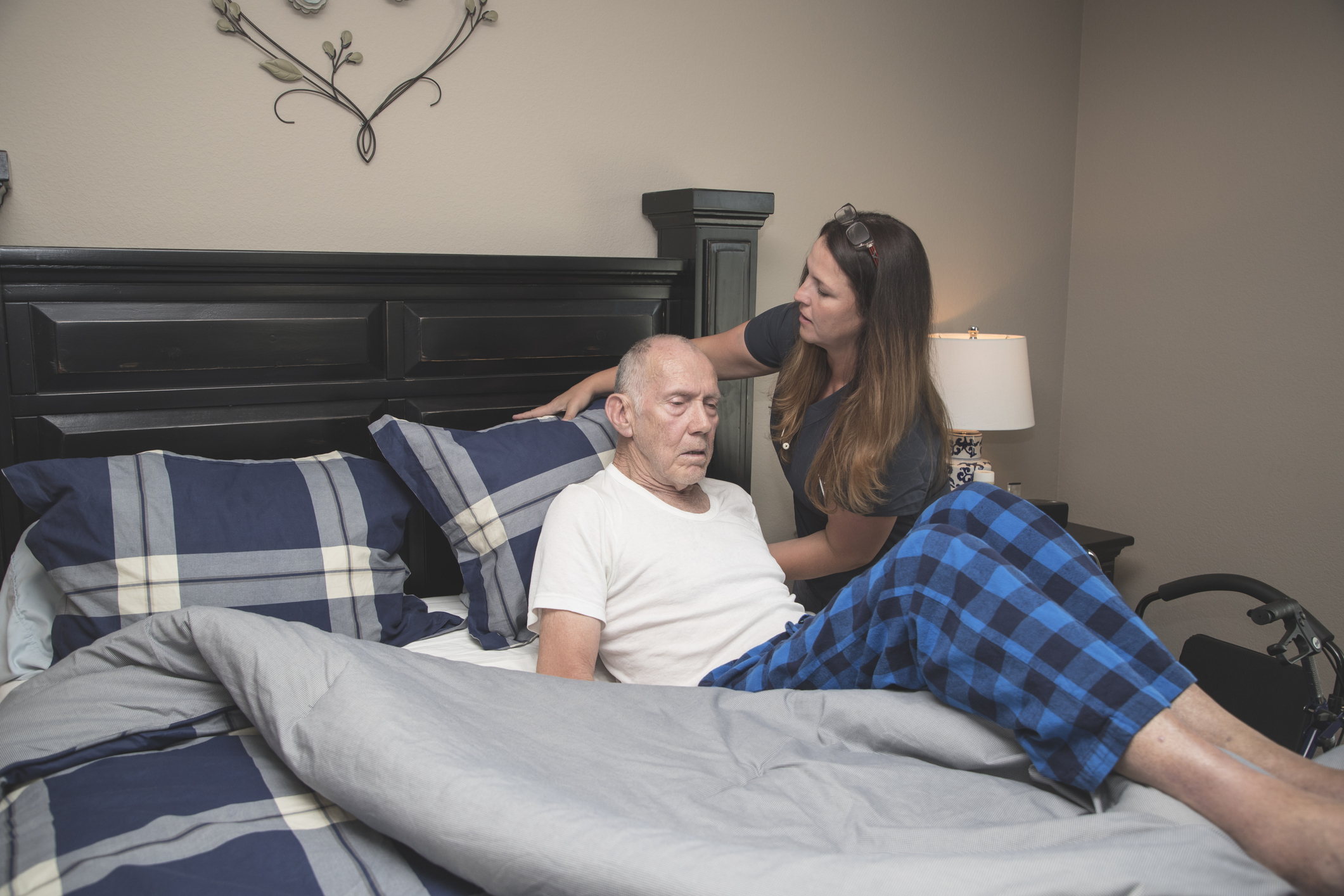
Dignified Choice Care provides trained caregivers who support your dad in bathing, meals, repositioning in bed, and overnight hours. Your dad can rest at home and you can sit with him instead of running the house. We work alongside your parent’s hospice team and each care plan follows the team’s orders.
Tell Us Which Hours Are Hardest to Cover
Nights, weekends, or the hours after work: share when you need help the most, and we’ll suggest a care plan that fills them.
How Home Care Works with Your Parent’s Hospice Team
In-home end of life care covers the daily tasks between hospice visits. The hospice team manages your parent’s medical comfort, and our caregivers provide hands-on daily care. A caregiver can help your mom wash, change her bedding, or keep her company while you step out.
Caregiver shifts run at least four hours and can extend to 24 hours a day. Our nurse builds the care plan around the hospice orders and updates it as your dad’s needs change. You keep the decisions, the time together, and any care you want to handle yourself.
The hospice team manages medications and can arrange chaplain support if your parent wants it. When a caregiver notices a change, like new pain, restlessness, or trouble swallowing, they report it to the hospice nurse. End of life home care does not replace your dad’s hospice team.
Familiar Routines and More Time Together
Keeping end of life care at home lets your mom keep the routines that matter to her. She wakes up in her own bed, eats on her own schedule, and can accept short visits from her friends. Her chair, her photos, and the view from her window stay the same. That familiarity is part of comfort care at home, not a bonus to it.
Steady caregivers also help her get comfortable. When the same care team comes in rotating shifts, they learn how she likes her pillows arranged and when she tires. They notice when she eats less or seems to hurt more, and they share it with the hospice nurse, who can adjust her medications.
When someone else handles the laundry, the bathing, and the 3 AM repositioning, your visits can be about holding her hand and talking with her as her son or her daughter. You can still help with home care, while respite care lets you step back when you need to rest.
Talk Through What Would Make Your Dad Comfortable
Tell us what helps your dad get comfortable, when he prefers to rest, and what kind of help he welcomes.
When End of Life Home Care Is Better for Your Dad
End of life home care is often a better fit when your dad prefers to stay at home, but needs more help than what the family and hospice visits can cover. These noticeable changes may be signs of end of life and his doctor can explain what those changes mean for him.
Treatment Is No Longer Working
The doctor talks less about available treatment and more about prioritizing your parent’s comfort. Care at home can focus on how to keep him comfortable each day.
A Doctor Has Talked About Prognosis
A doctor has said your dad likely has months rather than years. That conversation often comes with a hospice referral.
Pain or Breathing Is Harder to Control
Pain, nausea, deep fatigue, or shortness of breath keeps returning between doctor’s appointments. A caregiver at home can spot it early and update the hospice nurse.
Repeated Hospital Visits
Your dad goes to the hospital, returns home, but goes back again within weeks. In-home care can spare him some of those tiring trips.
Eating and Drinking Drop Off
He shows less interest in meals or has trouble swallowing, or loses weight without trying. This is a normal part of many serious illnesses, not something anyone did wrong.
Daily Tasks Need Help Every Time
Your dad may need someone nearby during bathing, dressing, or getting to the bathroom. Pay attention to when those tasks are hardest and which hours you need covered.
More Sleep and Less Conversation
Your dad spends most of the day sleeping, wants less conversation, or company for shorter periods. Tell the care team if he becomes harder to wake or responds less than usual. Sitting with him and talking to him still matters.
Some families call us before hospice starts, and some call after. Either way, our nurse builds the care plan around the orders from your dad’s doctor or hospice team.
Ways We Support Your Family Alongside Hospice
Most families combine home care services as a parent’s needs change. The choice comes down to which hours your family can cover, whether nights are the hardest part, and whether your dad has clinical needs.
Personal Care
A trained caregiver can help your mom wash, change clothes, use the toilet, or freshen up in bed. Personal Care keeps your parent clean and comfortable without asking the family to take on the hardest tasks.
Companion Care
A caregiver can sit with your dad, prepare food, and take care of light laundry. If he needs help eating, the caregiver follows his care plan and preferred pace. Companion Care also covers the quiet hours of the day, when your dad wants someone to read aloud or put on his favorite record.
Respite Care
Respite care gives you a planned break from providing care to your parent with a terminal illness. It gives you back time to rest, run errands, or spend time with family.
Overnight or 24 Hour Home Care
An overnight caregiver can be there during the late hours when you need to get up to help your mom. If she needs someone present throughout the day and night, caregivers are assigned on rotating shifts to fill in the 24 hour home care around hospice visits and family coverage.
Nursing & Palliative Support
Skilled nursing and palliative support are available to help your dad with specific needs, including wound care or feeding tube management. If hospice is already involved, ask the team who will handle each nursing task before arranging a separate in-home care visit. We explain any separate nursing fee up front.
Each type of in-home support draws on our Home Care Services, and a registered nurse builds a tailored care plan that meets your parent’s daily and comfort needs.
What Shapes the Cost of Private End of Life Care?
The cost of private end of life care depends on how many caregiver hours your parent needs. In 2025, the median rate for a non-medical caregiver in Minnesota was $44 per hour, was $44 per hour (CareScout Cost of Care Survey, 2025). Your actual cost depends on a few factors:
Hours Per Week: Care is billed by the hour and each shift runs at least four hours. Care needs and schedules often expand over the final weeks.
Overnight Coverage and 24 Hour Home Care: Overnight and round-the-clock care coverage add the most hours, so they move the total amount the most.
Skilled Nursing Visits: Nursing needs like wound care or feeding tube management carry a nursing fee that we disclose up front. Medication setups by our nurse are also billed at the standard hourly rate.
What Hospice Already Provides: Some hospice teams send staff to help with your parent’s bathing a few times a week, lowering the hours you need from our care plan.
One-time Setup Fee: A one-time setup fee applies when care begins. After that, you pay one flat hourly rate, with no add-on fees for routine care tasks.
Medicare’s hospice benefit pays for the hospice team, but it does not cover round-the-clock or ongoing caregiver shifts at home. For an accurate number, we’ll look at your parent’s needs and the hours hospice already covers, then give you an estimate based on the actual care schedule.
Care Plans and Trained Backup for Your Parent’s Comfort
At Dignified Choice Care, end of life home support starts with a care plan written by a registered nurse. The nurse meets your family, builds the plan around the hospice orders, and updates it as needs change. Our caregivers include CNAs, retired nurses, and physical therapists, and each one is trained on your parent’s plan before the first shift starts.
If the scheduled caregiver can’t make a shift, a trained backup covers it. A supervisor or client coordinator who already knows your parent’s plan goes to the home and works the shift. You don’t get a call saying nobody is coming. Between January and late August 2026, we missed 6 of 8,516 scheduled shifts. Near the end of life, a missed shift means your mom goes without help, so covering it is our job, not yours.
What Families Say About Dignified Support in the Final Months
⭐⭐⭐⭐⭐
“Dignified Choice Care provided in home care for my dad, who was on hospice. Their care provider, Chris, was awesome. Chris’ daily care routine helped keep my father comfortable when he was no longer mobile. We fully trusted Chris in our home. Chris even repaired mom’s vacuum cleaner one day while dad was sleeping.”
– Matt S., Verified Customer
⭐⭐⭐⭐⭐
“They took great care of my mom as she was becoming less able to care for herself for dressing, making meals, and light housekeeping. They were lovely companions so that along with family members she had someone with her everyday. We were very grateful for their care in her final years of life.”
– Ann S., Verified Customer
Helping You Become a Daughter or Son Again
End of Life Home Care in the Twin Cities and Nearby Suburbs
Dignified Choice Care provides end of life care in the Twin Cities metro from our home office in Burnsville. We work with families in Minneapolis and St. Paul and in suburbs such as Bloomington, Eagan, Edina, Apple Valley, and Woodbury.
You can check your parent’s community on our Service Areas page. In winter, a caregiver already in the home also means fewer icy drives for your family.
End of Life Care FAQs
What Is the Difference Between Hospice and Palliative Care?
Palliative care focuses on comfort and can start at any stage of a serious illness, even during treatment. Hospice is palliative care for the final months, when a doctor certifies a life expectancy of six months or less and curative treatment has stopped. Our caregivers support families in both end of life care and palliative support situations.
How Can I Estimate What We’ll Pay for the First Week?
Request a first-week estimate based on scheduled caregiver hours, the one-time setup fee, and any separate fees for nursing visits. If your relatives are taking turns staying with your parent, tell us which days they’re available. That helps us estimate the hours you’ll need a caregiver.
How Soon Can Care Start Once Hospice Begins?
Care can start once our nurse has built the care plan around the doctor’s or hospice team’s orders and a caregiver is arranged. Share the hospice details or hospital discharge date, and we’ll plan the first caregiver visit around it.
Can My Mom Stay Home If She Also Has Dementia?
Yes. Caregivers learn your mom’s routines and cues before the first shift, which helps her days feel predictable. The nurse updates the care plan as memory loss and other care needs change, and her hospice team handles the medical side.
Build a Home Care Plan Around Hospice and Family Visits
When you reach out, we’ll set up a free in-home consultation to learn about your parent, the hospice schedule, and when your family plans to visit.
Call us or send a short form through our contact page. We’ll talk through which hours to start with and explain the charges before you decide. We accept private pay and long-term care insurance, not Medicare or Medicaid. Our phone line is answered 24/7.